
Native Habitat:
Open woodlands, meadows, and forest edges throughout North America, including the Willamette Valley. Prefers well-drained soils with partial to full sun.
Bloom Time:
April – June
Growth Habit & Mature Size:
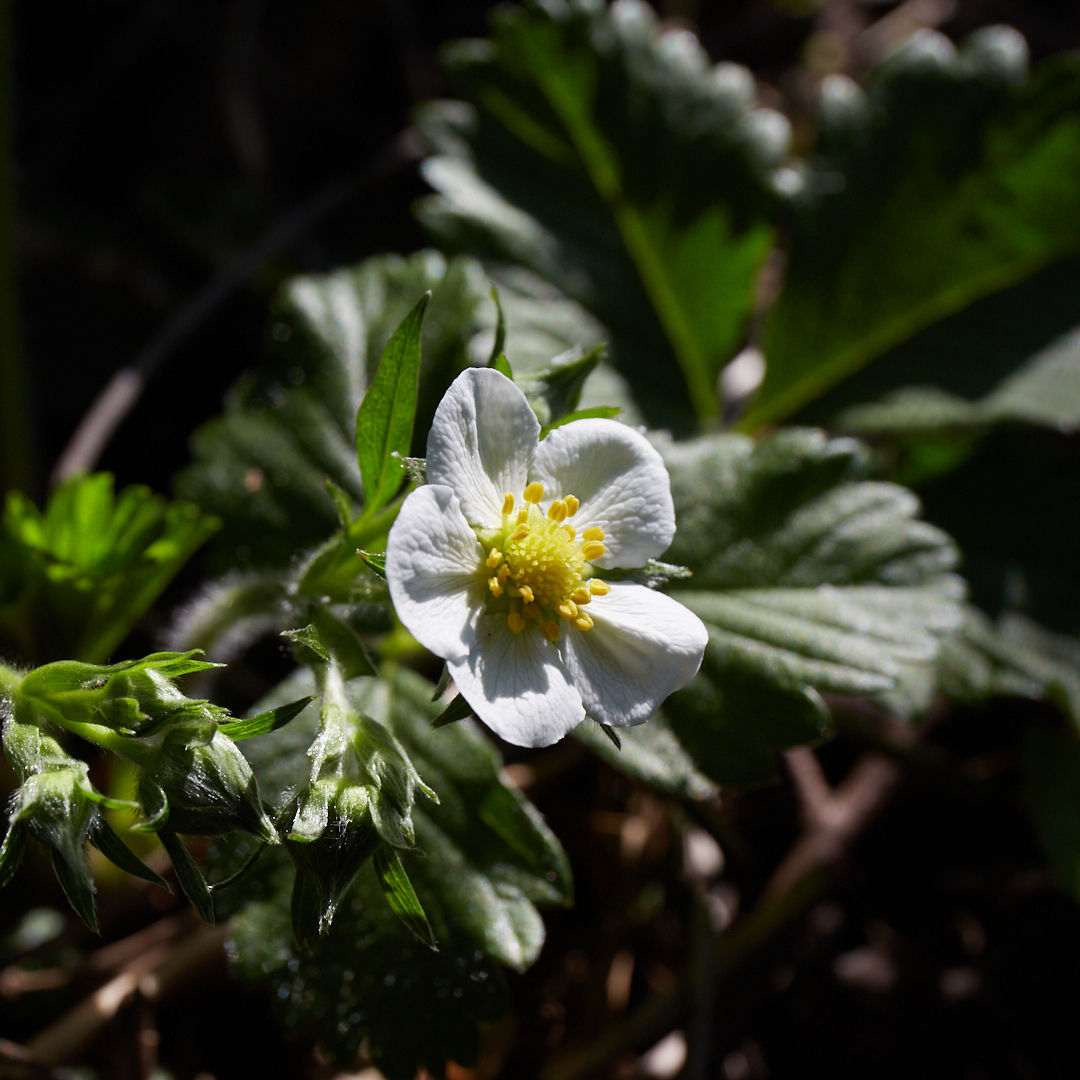
Perennial herb, low-growing (4–12 inches tall), spreading via runners to form mats. Produces trifoliate leaves and small white flowers, followed by sweet, red edible berries.
Light & Soil Requirements:
Full sun to partial shade; thrives in well-drained loamy or sandy soils. Tolerates moderate drought once established.
Willamette Valley Native Companion Plants:
Festuca roemeri, Camassia quamash, Achillea millefolium, Eriophyllum lanatum, Sidalcea campestris.
Urban Garden Function:
Provides low-growing groundcover, seasonal flowers, and edible fruit in urban meadows, woodland gardens, and naturalized landscapes. Ideal for layered plantings, pollinator gardens, and sustainable urban designs. Adds texture, color, and ecological function to small spaces.
Wildlife Supported:
Flowers attract native bees, butterflies, and other pollinators. Berries provide food for birds, small mammals, and insects. Dense mats offer shelter for ground-dwelling arthropods.
Historical Use:
Fruit and leaves were traditionally consumed by Indigenous peoples and early settlers; valued for edible production and ornamental use in naturalized gardens.


