
Native Habitat:
Open meadows, prairies, forest edges, riparian corridors, and disturbed sites across much of North America, including the Willamette Valley.
Bloom Time:
July – October
Growth Habit & Mature Size:
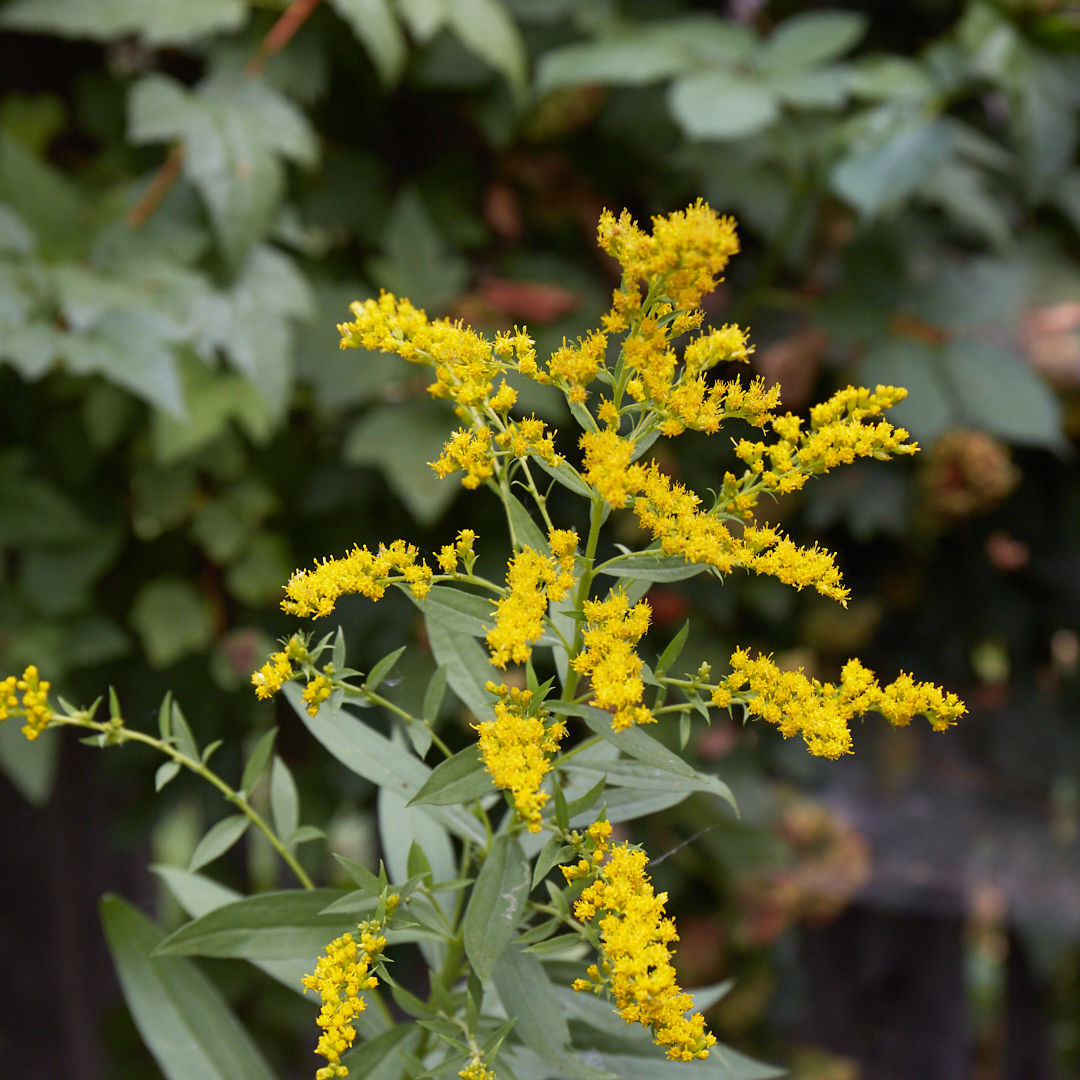
Perennial herb, 3–6 feet tall, spreading by rhizomes to form dense colonies. Features upright stems with narrow, lance-shaped leaves and large, arching plumes of numerous small, bright yellow flowers.
Light & Soil Requirements:
Full sun to partial shade; thrives in a wide range of soils including loam, clay, and sandy soils. Prefers moderate moisture but is tolerant of seasonal drought once established.
Willamette Valley Native Companion Plants:
Eriophyllum lanatum, Achillea millefolium, Symphyotrichum subspicatum, Festuca idahoensis, Sidalcea campestris, Camassia leichtlinii.
Urban Garden Function:
Provides late-season color, height, and strong ecological value in urban meadows, restoration plantings, and pollinator gardens. Best suited for naturalized areas, larger landscapes, and managed meadow plantings where its vigorous growth can be accommodated.
Wildlife Supported:
One of the most important late-season nectar sources for native bees, butterflies, wasps, beetles, and migrating pollinators. Seeds provide food for birds, and dense stems offer shelter for overwintering insects.
Historical Use:
Used traditionally by Indigenous peoples for medicinal purposes. Widely valued in ecological restoration and wildlife gardens for its exceptional pollinator support and adaptability, though it benefits from management in small garden settings due to its spreading habit.


