
Native Habitat:
Coastal forests, forest edges, and shaded slopes.
Bloom Time:
March – June
Growth Habit & Mature Size:
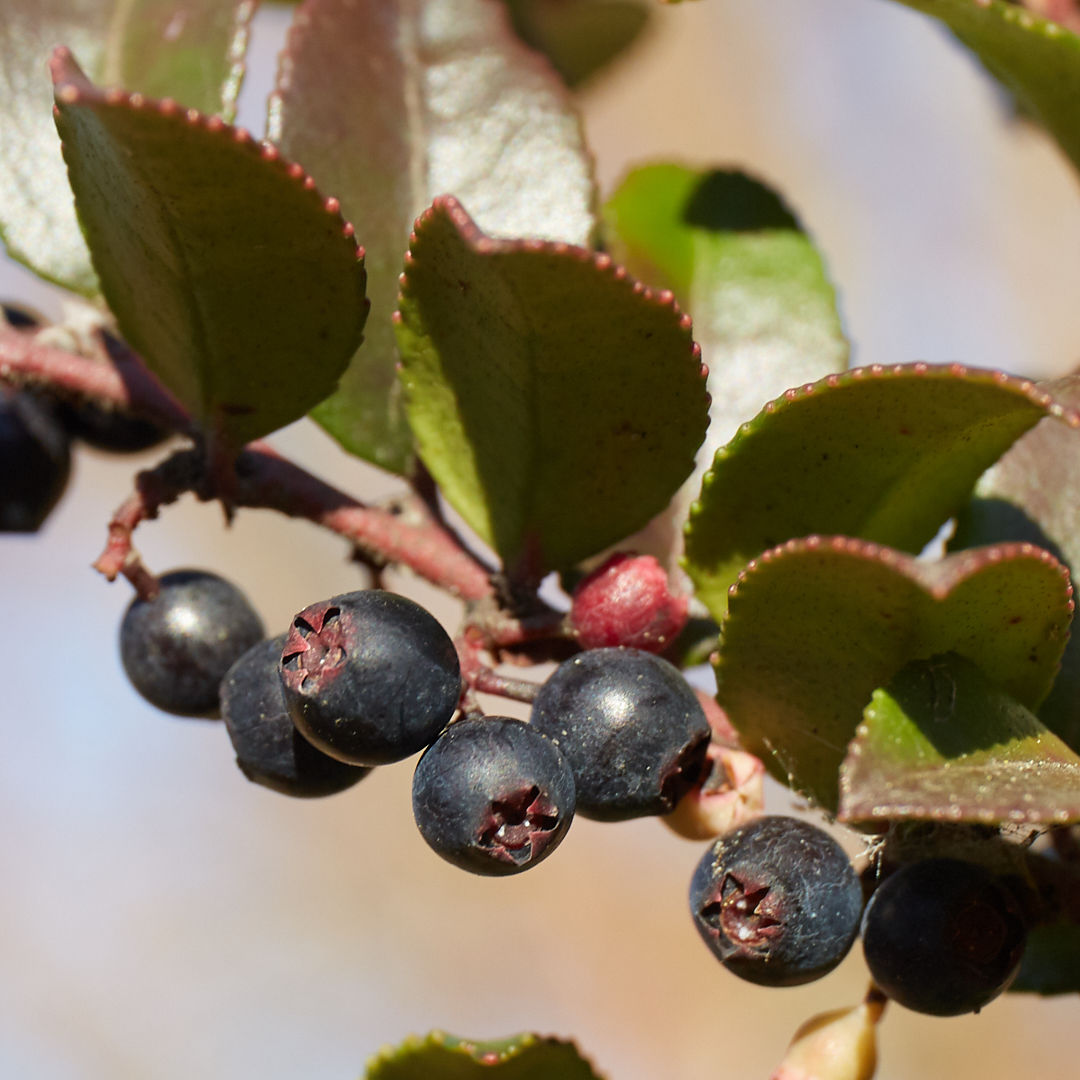
Evergreen shrub, 3–10 feet tall, with glossy, dark green leaves and dense branching. Produces small, bell-shaped white to pink flowers, followed by dark blue to black edible berries.
Light & Soil Requirements:
Partial shade to full sun; thrives in acidic, well-drained loam or sandy soils. Prefers consistently moist conditions but tolerates moderate seasonal dryness once established.
Willamette Valley Native Companion Plants:
Arctostaphylos uva-ursi, Gaultheria shallon, Camassia leichtlinii, Festuca idahoensis, Tolmiea menziesii.
Urban Garden Function:
Provides evergreen structure, seasonal flowers, and edible berries in urban gardens, naturalized landscapes, and woodland-inspired plantings. Works well as a layered shrub, pollinator-friendly planting, or low-maintenance specimen.
Wildlife Supported:
Flowers attract native bees and butterflies. Berries feed birds, small mammals, and other wildlife. Dense branching offers shelter and nesting habitat.
Historical Use:
Berries were traditionally harvested by Indigenous peoples for food. Valued ornamentally for year-round foliage, edible fruit, and ecological benefits in native plant and restoration gardens.


