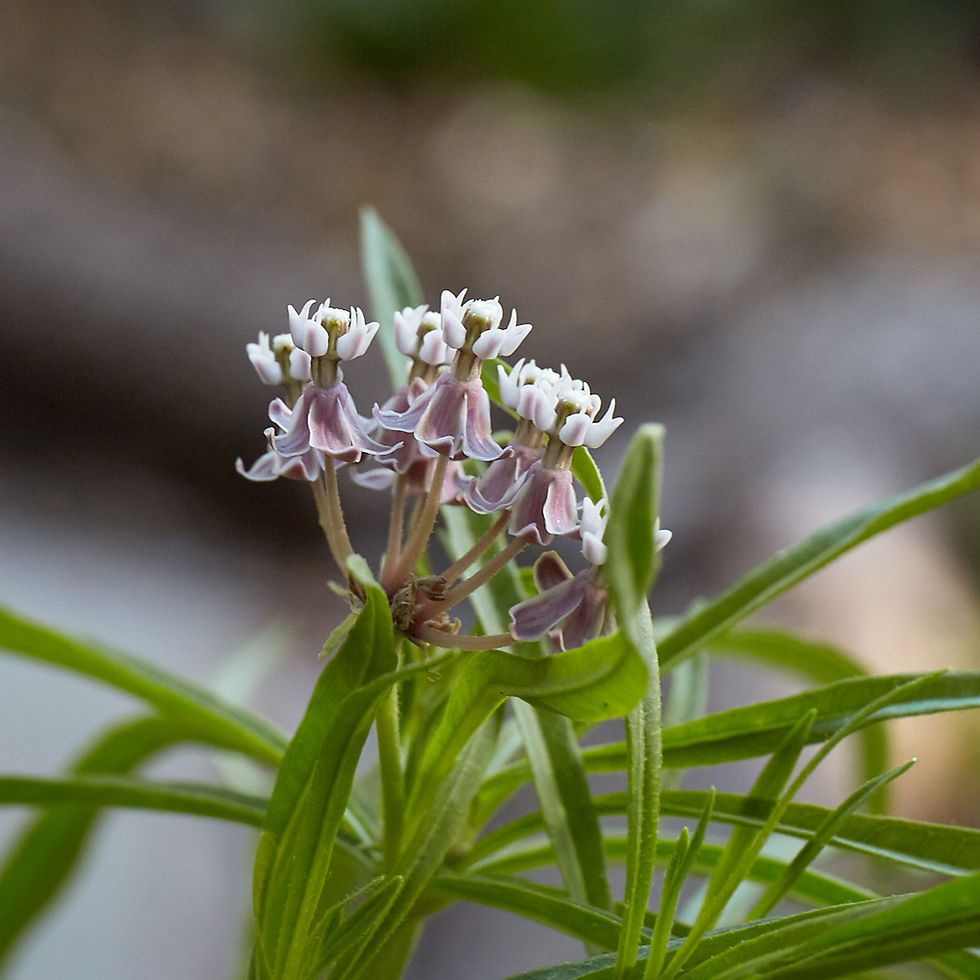
Native Habitat:
Open meadows, prairies, roadsides, riparian terraces, and sunny disturbed areas across western North America, including dry to mesic habitats of the Willamette Valley. Prefers open exposure and seasonally moist to dry soils.
Bloom Time:
June – August
Growth Habit & Mature Size:
Rhizomatous perennial herb, typically 2–5 feet tall, with upright stems and broad gray-green leaves covered in soft hairs. Produces large spherical clusters of fragrant pink to rose-purple star-shaped flowers followed by elongated seed pods filled with silky-haired seeds.
Light & Soil Requirements:
Full sun; thrives in well-drained sandy, loamy, or gravelly soils. Drought tolerant once established and adapted to summer-dry conditions.
Willamette Valley Native Companion Plants:
Solidago canadensis
Achillea millefolium
Eriophyllum lanatum
Festuca idahoensis
Sidalcea campestris
Symphyotrichum subspicatum
Urban Garden Function:
Provides bold structure, extended summer bloom, and critical pollinator habitat in urban meadows, prairie gardens, and ecological restoration plantings. Excellent for wildlife-focused landscapes and drought-tolerant native plant designs.
Wildlife Supported:
A vital host plant for monarch butterflies and other milkweed-dependent insects. Flowers attract native bees, butterflies, hummingbirds, and numerous beneficial pollinators. Seed fibers are used by birds for nesting material.
Historical Use:
Used traditionally by Indigenous peoples for fiber, cordage, food preparation, and medicinal purposes. Widely valued today for monarch butterfly conservation, pollinator support, and ornamental flower display in native landscapes.